Category Archives: Lizard

Kynance Cove

View map of beach Parking available Toilets available South West Coast Path The Lizard National Nature Reserve SSSI National Trust Dog friendly

Season: spring

Consistently among the most viewed beach pages at manonabeach®, Kynance Cove is for many people the quintessential Cornish cove and beach.  Its combination of characterful islands, serpentine-laced caves, a blowing hole and pristine beaches is exquisite.  I frequently encounter visitors experiencing a natural “high” here and it’s intoxicating.  The best time to visit is on an ebb tide towards low tide, enabling safe scrambling around the nooks and crannies here.
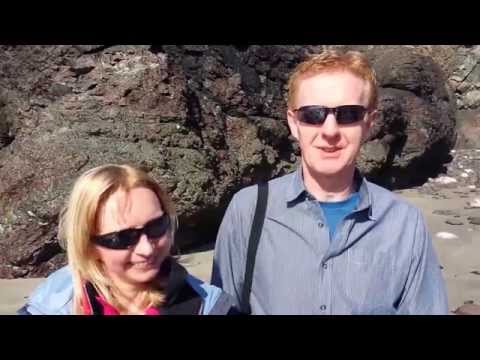
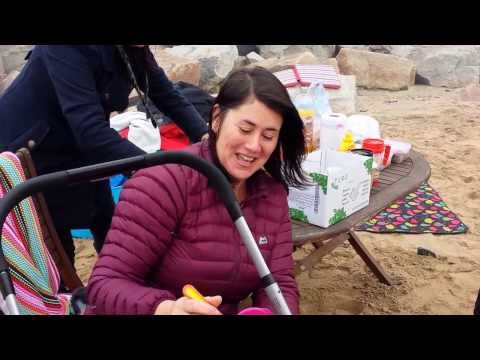
What the beach means to Karen and Mark.

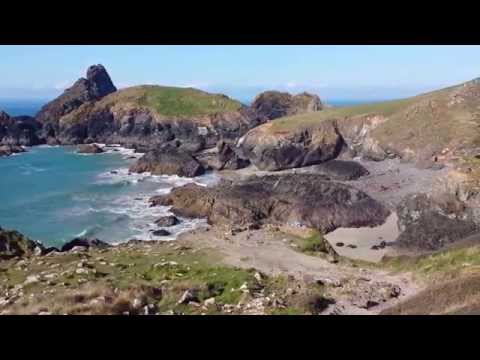
A bright start to the day at Kynance Cove.

A chance to enjoy the blowing hole.

Season: autumn

The tide had turned back inward at Kynance Cove, but you could still get round to the blowing hole, know as the bellows, to see the caves and their serpentine.  Grey clouds cloaked the scene, but the rocks framed a tempting horizon, beyond which lay new adventures and acquaintances, new suggestions and implications, new challenges and opportunities.

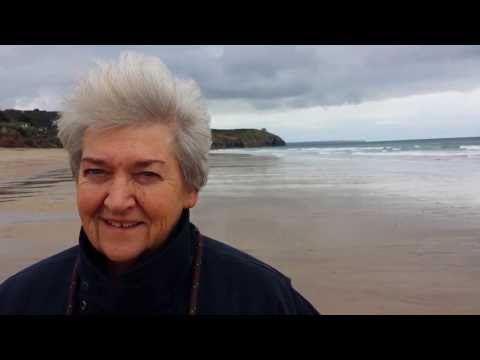
Barbara reflects on the beach as a place to look out from and as an inspiration for her work.
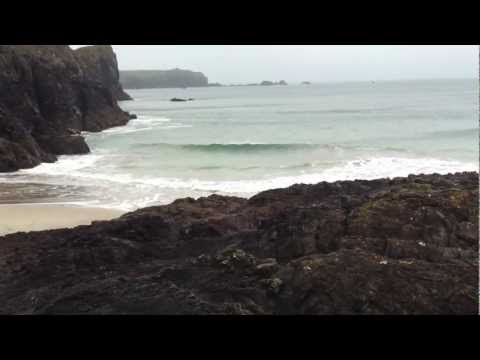
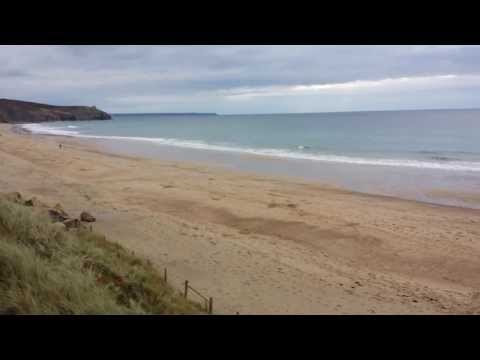
A slightly elevated view, looking down to the beaches at Kynance Cove and out to sea.

Season: summer

What a pleasure it was to be the first person on the beach this morning at beautiful Kynance Cove.  As the tide turned inwards, my footsteps were washed away and the beach assumed another guise, as it has done throughout time.  Recent storms had scoured the sand from the top of the beach, but the elements will conspire to replace it just as quickly.  Like Treen Cove and Rinsey Cove, you need to time your visit to coincide with a low tide for the best beach access, although you can get to the cafe at all times.

Vicky’s ongoing relationship with the beach and Kynance Cove for all her family.
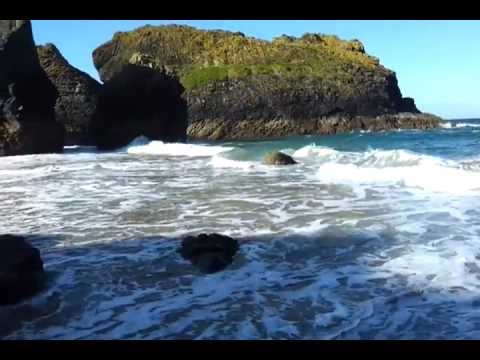
In awe of the relentless sea, round by the bellows at Kynance Cove.

Season: winter

I went down early to Kynance Cove to catch the tide halfway in, so I could watch the waves against the rocks.  Later, I returned to interview Arthur on the rocky slopes down to the beach, then chat to Gail at low tide by the blowing hole on the beach.  This is one of the most photographed beach in Cornwall and never fails to impress.  You feel like you’re in another world down on the sand and your mind can fly away if you let it.
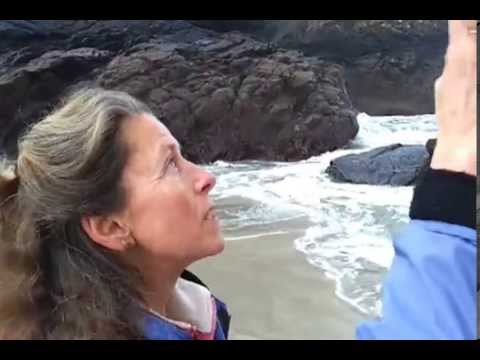
A chat with Gail by the water at Kynance Cove in February.
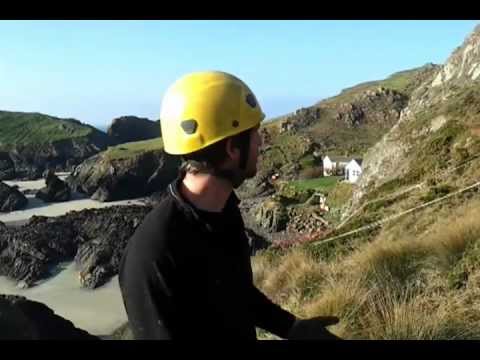
With Arthur, helping to secure the rocky side of the pathway down to Kynance Cove.
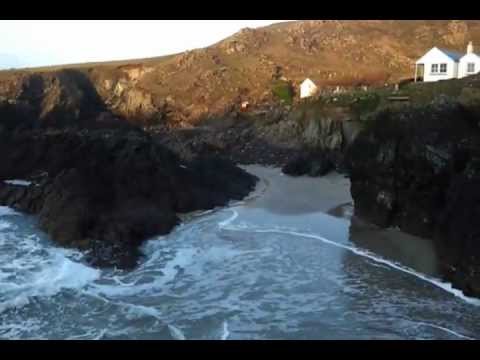
The waves and rocks at Kynance Cove on half a tide, seen from just above the sea.

Season: autumn

This is a must-visit beach, probably the most outstanding in the county visually at low tide.  It has everything, rolling breakers, sea stacks, caves lined with serpentine, fine sand, a blowing hole and a theatrical setting, when viewed from above on the walk down.  Check tide times before your visit to catch it at low tide.  There is an excellent café in the cove with facilities and toilets, but access requires a degree of energy from the detached car park, well worth the effort.  I always seem to meet interesting people at Kynance Cove.
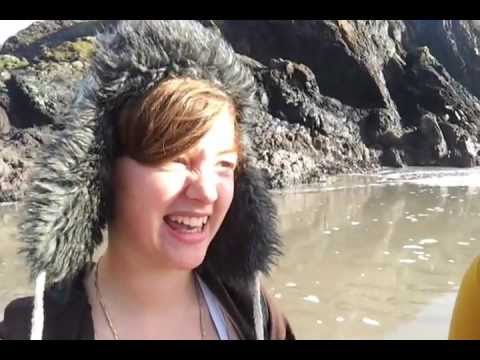
A chat with Heather and Rachel.

Chatting with Kelly McMahon, who is descended from the first McMahon in Australia.
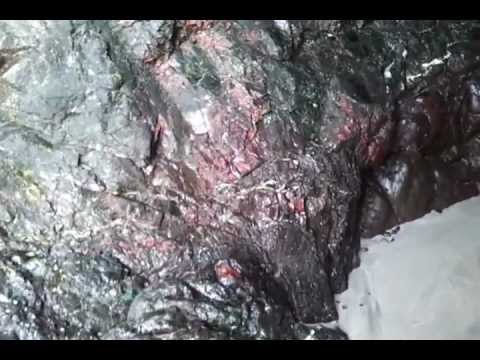
Serpentine in the caves at Kynance Cove.

Season: summer

An atmospheric mist hung over Kynance Cove, yet a mild breeze still broke through on this invigorating beach.  The tide was halfway in and the horizon was temptingly opaque, a gateway to the west and beyond.  Beachgoers gazed in wonder out from the beach, including my German interviewees, more used to the beautiful but landlocked Bayerische Alpen in the south of their country.  This beach draws visitors from every corner the world and their enhanced responses are universal.
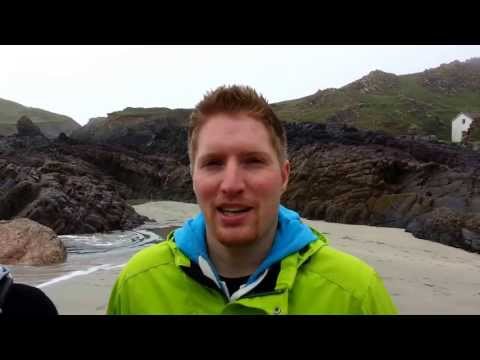
Visitors from southern Germany enjoy the universal appeal of this beach.
…und auf deutsch.
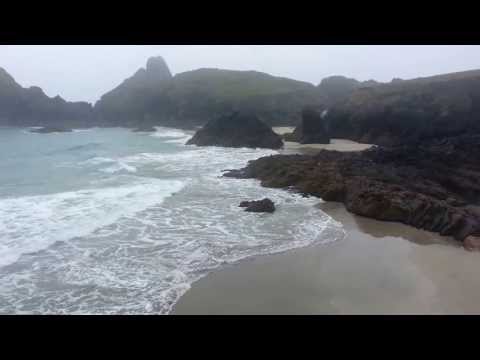
A wild, misty vista at Kynance Cove.

Coverack beach

View map of beach Parking available Toilets available South West Coast Path SSSI Dog friendly Beach cleaned regularly Good water quality for swimming

Season: winter

A fine winter sun shone through at Coverack during this visit.  A high tide was just falling back.  The bay is ideal for swimming and it’s an interesting beach from a geological perspective, like much of the Lizard Peninsula.  As you look north, the headland is made of Gabbro, from the earth’s crust, then walking south along the beach is like journeying to the centre of the Earth, the opposite headland being made of what is now Serpentine, originally from the mantel lower down.

The beach resonates through generations for Nanette.

Coverack in the sunshine on a high tide.

Season: winter

The tide was high and the sea was calm for this winter visit. The recent storms and wet weather had caused subsidence of the bank next to the beach, so the main road into Coverack was closed and sandbags were temporarily protecting the sea wall.  The village was predictably quiet and the harbour was a fine sight.

The appeal of beaches far and wide to Brian.

A peaceful scene at high tide.

Season: summer

On a bright August morning, the secluded bay at Coverack looked spectacular.  This is a great swimming beach and has a charming harbour, still used for inshore fishing.  On an ebb tide, with the beach well covered in sand during this visit, the scenery was stunning, looking out to the bay towards the clear morning sun.

Tim’s love of the beach and Cornwall.

By the water as the day begins.

Season: spring

The fishing village of Coverack sits in its own small bay between Kennack Sands and Porthoustock on the eastern side of the Lizard peninsula.  It has a strong resident population and a sense of identity.  Facilities are conveniently close at hand.  The old fishing harbour is scenic, sitting below the Paris Hotel.

With local girl Barbara, proud of her village and background.

A languid sea playing on the beach at Coverack.

Season: winter

A lively easterly wind and a rising tide added spice to the beach for this winter visit.  This is one of the safest and most sheltered swimming beaches in Cornwall (see Barbara’s interview, above), but the waves and current were lively on this rare combination of weather circumstances.  A bright, low sun lit the sand, as dog walkers, locals and visitors enjoyed the natural beauty of the beach and the characterful fishing harbour and shops.

Olivia’s village initiative.

It’s a long road for Jannina.

On the beach at Coverack.

Cadgwith

View map of beach Parking available Toilets available South West Coast Path SSSI Dog friendly

Season: spring

This seasonal return to Cadgwith was marked by mild, settled weather, such a change from the violent winter storms that the village had recently endured.  Visitors were enjoying the South West Coast Path, which stretches in both directions from the cove, as well as the fresh fish outlets, pub and gift shops in the village itself.  As testified by interviewee Fleur, Cadgwith is a working port which still feels vibrant at all times of the year, with an inclusive feel, regardless of circumstance.

What the beach means to Fleur.

cadgwith cottages

In the village at Cadgwith Cove.

Season: winter

Time seemed to stand still, standing on the end of the Todden in Cadgwith as the morning sun broke through the sky onto the two small beaches here.  A high tide was starting to fall away and a blanket of white ebbed and flowed over the black rock of the headlands.  All the boats were pulled right up the hard standing, with one parked on the road by a thatched cottage.  Most activity was under cover, where I found Peter in his workshop.

With Peter, aka Plugger, at ease in his workshop.

A wonderful start to the day, looking out towards the morning sun from Cadgwith.

Season: autumn

It’s no accident that access to Cadgwith, Mousehole, Mevagissey and Fowey is tricky by road.  They’re all designed to be approached from the sea and all the houses point out to sea, the traditional source of income.  The small inshore fleet at Cadgwith is still viable, but part of a smaller Cornish and UK fishing fleet.  Nowadays, visitors can enjoy looking back towards these harbours from the headlands, part of the excellent South West Coast Path.  The fishing boats, drawn up on the hard standing, seem to fascinate visitors, perhaps tapping deep into a lost association we all have with the coast, back through our history.

A long way to come, but well worth it for Keith and Carole.

Season: summer

It was a mild morning for this visit, with visitors’ children rock pooling on the beach at low tide.  Wild flowers still showed and the birds were singing above the little beach where I filmed, separated from the fishermen’s beach by the rocky outcrop, known as The Todden.

With two visitors at Cadgwith, checking out Cornwall before a Lands End to John O’ Groats cycle ride.

Chris’ place within the rhythms of Cadgwith.

The beach at low tide in Cadgwith, as viewed from above.

St Anthony-in-Meneage

View map of beach South West Coast Path SSSI Dog friendly

Season: spring

St Anthony-in-Meneage sits peacefully on the northern edge of Gillan Creek, itself on the southern side of the Helford River.  The tide was in for this visit and people were preparing their boats for another sailing season.  The setting is idyllic, with the church of St Anthony and small cottages behind the hard standing.  This creek offers some of the best access to the sea on this side of the Helford estuary and is popular with yachting enthusiasts and kayakers alike.  The village feels timeless and peaceful, although a Celtic fortress once stood nearby on the headland.  The South West Coast Path traverses Gillan Creek here and the area is part of a Site of Special Scientific Interest.

A spirit of adventure, with Rebecca and River.

What the beach means for Anne and John.

By Gillan Creek at St Anthony-in-Meneage.

Lizard Point

View map of beach Parking available Toilets available South West Coast Path SSSI National Trust Dog friendly

Season: spring

This early morning visit coincided with bright sunshine that had started to burn off the morning mist.  Heavy dew on the cliffside grass provided a counterpoint to the clear air, full of the scent of wild garlic.  Sea pink and primroses abounded and I photographed a transient snail on the coast path (see photo gallery below).  There was a spring in the step of those that I met, including interviewee Dawn, for whom this is a special place.

The importance of the Lizard to Dawn.

A bright start to the day at Lizard Point.

Season: autumn

Bright sunshine greeted me for this trip to the end of the Lizard, which is the most southerly point in Britain.  The tide crashed against the rocks, as gulls, crows, jays and a lone chough circled above the fields next to the cliffs.  This part of the county has different geology to the rest of the Lizard and Cornwall, hence the serpentine you find in caves nearby at Kynance Cove.

The appeal of the rocks and the sea to John.

A bright autumn morning at Britain’s most southerly point.

Season: summer

It was a fine summer’s morning for this visit.  On a high tide, gulls congregated on the first landfall at the most southerly point of these islands.  A seal bobbed up at the inlet next to the cafe and the choughs were still in their sea caves.  I walked towards the Housel Bay Hotel past the brilliantly situated youth hostel by the Lizard lighthouse to catch the action of the sea against the rocky shore.

With Kate and her appreciation of the beach.

Along from Lizard Point, enjoying the sea in the morning.

Season: spring

The early morning sun was bright against a falling tide.  A low light set the protruding rocks in relief, their clean shadows sharp against the blue sea at the Point.  I walked round to Housel Bay to enjoy its outstanding setting deep below imposing cliffs, with the sun blinking over from the east.  The falling tide created the surreal effect of being in a pleasure dome, with mine the first feet on a virgin beach, a natural high.

Margaret’s routine in Cornwall.

The magnificent beach at Housel Bay in the morning.

Season: winter

The sun was shining once again for this winter visit to Lizard Point.  I could see way out to sea, but this time I took the short walk round to the adjacent Housel Bay, with its hotel sitting romantically above the beach.  I chatted on the terrace to an Austrian visitor, Manfred, then Alfie and I went down to the beach, where I learned why it’s so special for him.

With Alfie on Housel Bay beach.

Chatting to Manfred, an Austrian visitor, on the terrace of the Housel Bay Hotel.

Another view of Lizard Point.

Season: autumn

Lizard Point, the most southerly land in Britain, has a small beach next to the old lifeboat house.  All around the beach are reasons to visit, from the serpentine shops and Polpeor café to the seals, choughs and adders that you can find in the area.  The Lizard lighthouse is spectacular, and you have easy access to Bass Point, the Lloyds telegraph building and the Marconi wireless hut, as well as a wonderful coast path.  There are toilets and all facilities to hand, plus a spectacularly located Youth Hostel.  You can even walk easily to the Lizard village, where Ann’s Pasties are some of the best you can get.

Interview with Peter of Polpeor Cafe, the most southerly cafe in Britain.

The garden of the Lizard lighthouse.

Another view of the Lizard lighthouse.  This is the last bit of our island you see when you’re sailing South to France and beyond.

Mullion Cove

View map of beach Parking available Toilets available South West Coast Path The Lizard National Nature Reserve SSSI Dog friendly

Season: spring

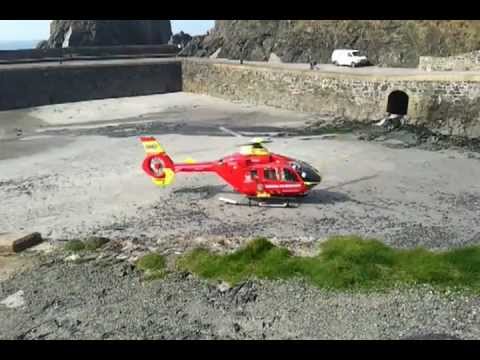
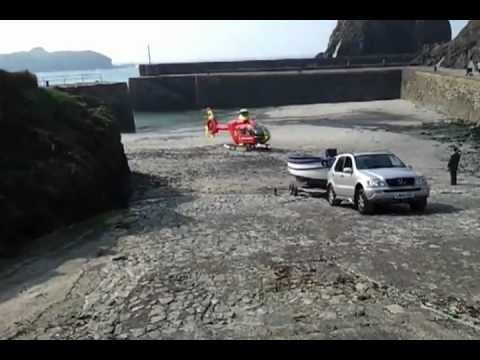
It was a fine day at Mullion Cove for this visit.  The tide was low, showing the beach and the first boats being lowered down the slipway towards their summer moorings.  A celebration taking place at the cove was interrupted by the arrival of the Cornwall Air Ambulance onto the beach to treat a patient, all successfully resolved.  I also filmed the skillful departure of the helicopter, an invaluable resource for Cornwall, particularly during the summer with the narrow roads.

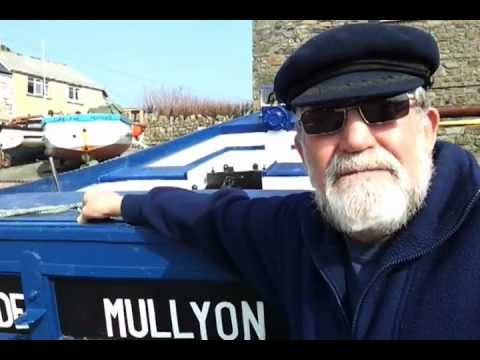
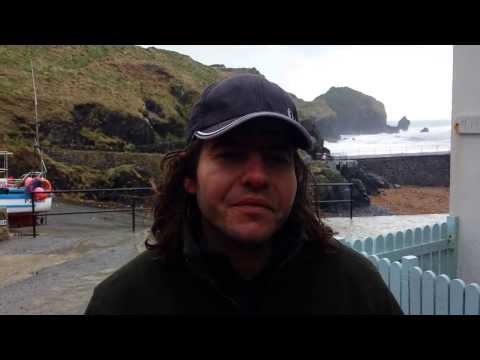
With Barry Mundy, who explained his commercial diversification over a career working Mullion Cove and some of the history of the harbour.

The Cornwall Air Ambulance arrives to treat a casualty at Mullion Cove.

The departure of the helicopter after a successful resolution.

Season: winter

There was a return to wild winter storms at Mullion Cove.  The harbour wall had been damaged by the last round of violent waves and the end of the harbour was cordoned off.  Although it was low tide, waves still erupted over the harbour and there was a sea of white breakers beyond, stretching right out to the island. Small boats were safely harnessed at the top of the hard standing, as Mullion Cove braced itself for another high spring tide, with 70 mph onshore winds forecast.

The power of the sea, forever changes at Mullion Cove.

Season: autumn

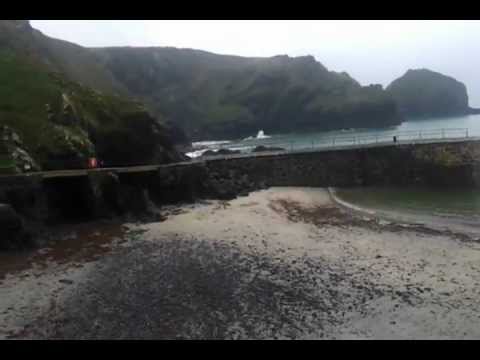
This was a quiet, early morning visit to Mullion Cove, a well maintained and renovated harbour facing the Atlantic.  Rather like Charlestown, this place gives you a feel of the olden days, but without the hustle and bustle.  Outstanding walks extend either way from the harbour, which is at a geological changeover point rock-wise, with serpentine prevalent south of here.  There are toilets and ample parking, plus a shop during the season.  You are also handy for the busy village of Mullion with its shops, churches and pubs.

The harbour at Mullion Cove, seen from the road at the entrance.

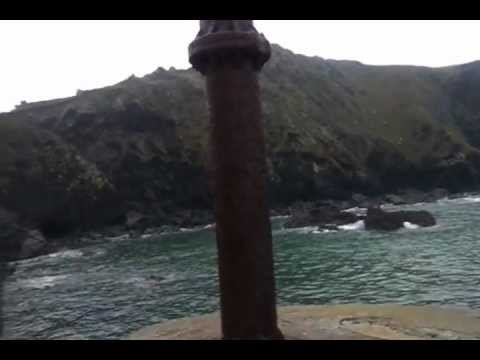
Looking back at the harbour from the breakwater.

Prussia Cove

View map of beach Parking available South West Coast Path SSSI Dog friendly

Season: spring

If you park at the top of the hill next to the big house with the turrets on the tower, then walk down the lane to Prussia Cove early in the morning, I dare you not to feel the pioneering spirit of old that still hangs in the air.  This is an extremely creative place, by turn inspiring and threatening.  It was no surprise then, when I ran across a member of the International Musicians Seminar, who arrive to play together here twice a year, coming from all over the world.  You can learn more about Jenna’s work at her website.

With musician Jenna above Bessy’s Cove.

Atmosphere and drama at Prussia Cove.

Season: summer

Looking west, just above the Lizard Peninsula, was the Atlantic Ocean in all its splendour for this visit.  A fisherman stressed the enhancing effect of the beach’s natural stimuli.  The sun was out and all was well at the weekend.

On the rocks by the Atlantic with a fisherman.

Looking out west towards a fishing boat.

Season: winter

This part of the Cornish coast looks west from the Lizard Peninsula, located between Praa Sands to the south and Marazion to the west.  Essentially a headland comprising Kenneggy Cove, Bessy’s Cove and Piskies Cove, Prussia Cove has a tradition of derring-do and smuggling.  There’s a walk down a lane from the car park and no shops or toilets to be found down here.  It’s a magical place, highly recommended.

A snapshot of Old Cornwall.

Church Cove beach, Gunwalloe

View map of beach Parking available Toilets available South West Coast Path SSSI National Trust Dog friendly Good water quality for swimming

Season: winter

The high tide at Church Cove coincided with a wild, stormy morning.  The sea looked, smelled, sounded and felt magnificent as it pounded onto the headlands and beach.  Days like this display wonderful, natural power and harmony, uncontrollable and reassuring.  Safe in the lea by the Church of St Winwalloe next to the stripped tamarisk, you can imagine the effect of another storm on the Portuguese sailors who spilled their silver, just round the corner at Dollar Cove.

An ever changing beach and the buzz of being near it for Joe.

Nick reflects on his enjoyment of the beach.

Shelter from the storm at Church Cove.

Season: summer

It was a magical summer morning at Church Cove.  You’ll find this unspoilt beach just outside Gunwalloe, sitting between Poldhu Cove to the south and Halzephron Cove to the north.  For this visit there was a soothing, mild breeze and bright sunshine, with tempestuous breakers crashing in on a rising tide.  Church Cove, including Dollar Cove next door, has an inexplicably benign atmosphere, as testified by Andy in his chat below.  Great beach, highly recommended.

Andy puts this beach into a global context.

What the beach and the sea means to Paul over a lifetime.

On the rocks at Church Cove on the Lizard Peninsula.

Season: spring

By the water at Church Cove the incoming waves were so aerated that they piled in like swathes of meringue, exploding on the black cliffs into white shards.  It was sunny and warm; this felt like a timeless cove, facing the prevailing elements.

Miles explains the role of the beach and the coast in his foraging and brewing.

Picture yourself, on a beach by the ocean…

Porthallow beach

View map of beach Parking available Toilets available South West Coast Path SSSI Dog friendly Good water quality for swimming

Season: spring

The sea was dead calm at Porthallow village, which looks out across Falmouth Bay, here at the top of the Lizard peninsula.  The same peaceful silence that I’d noticed on my previous visit still pervaded this ex-pilchard fishing village  The contrast between the international maritime industry in front of me as I looked across the bay and the tranquility behind me was palpable.

With David, pondering the perennial Cornish conundrum.

Standing on this beach felt like being at the nerve centre of a culture, somewhere oddly profound, held in suspended animation.

Season: winter

There was a quiet feel to Porthallow for this winter visit.  A high tide lapped against the shore and the village had a sleepy ambiance, often the case on my trips here.  Interviewee Stephanie reflected on the appeal of all beaches and the inspiration for her work provided by the beach and the wildlife here.

Nature provides for Stephanie and her work.

Peace and quiet at Porthallow on a winter day.

Season: winter

It was a bright day for this winter visit to Porthallow.  The South West Coast Path had collapsed onto the beach, a victim of the ongoing wet winter.  Looking across Falmouth Bay, a fine vista unfolded towards St Anthony Head and St Mawes, with the Nare Head and the Dodman Point further along the coast.  Porthallow feels tucked away, peeping out from its corner of the Lizard Peninsula as the world rushes by.

Dorothy observes nature’s work.

Looking out from the beach at Porthallow.

Season: autumn

Reputedly where the spirits of old Cornwall are laid to rest, this village and beach ooze history and whimsy.  The beach feels very empty, despite being part of the village.  Porthallow was once a thriving pilchard fishing village, as witnessed by the 5 Pilchards pub.  I had a long chat with 96 year old Muriel Webb, who waxed lyrical about the old days when fishing and farming were kings and when families and the village knew everyone and stuck together.  When I asked her what she thought the future held, she said she hoped for “an improvement in the state of the Age”, which I took as a positive call to arms, to make the best of whatever the present throws at you.  It reminded me of Voltaire’s “Il faut cultiver notre jardin” at the end of “Candide”.

A two part interview with wonderful 96 year old Muriel Webb, a Cornish philosopher:

and…

A winter morning.

Praa Sands

View map of beach Parking available Toilets available South West Coast Path SSSI Dog friendly RNLI lifeguard cover May 4 - September 29, April weekends, October weekends and half term Beach cleaned regularly Good water quality for swimming

Season: winter

The weekend scene at Praa Sands was one of families and dog walkers enjoying the long beach, as the tide reached its lowest ebb. The odd surfer mingled with the marine wildlife and the sky was full of heavy clouds.  There was an atmospheric feel to the day and a settling ambiance, ideal for introspection and a sense of perspective.

Family times at the beach.

Brenda’s enjoyment of this natural space.

A view of the beach at Praa Sands from above.

Season: autumn

This is a big beach with a big reputation, both for surfers and visitors alike.  Looking out to the south west from the Lizard peninsula, it is spectacular by any standards.   Benefiting from its proximity to the South West Coast Path to Prussia Cove and beyond, Praa Sands offers a great visitor experience.  There are toilets, beach cafes and shops.  It even has a short links golf course in the dunes behind the beach.

A chat with Roy at the Beachcomber Cafe by Praa Sands.

Testimonies to the beach from Eric and Anna at their motor-home, parked above Praa Sands.

Season: winter

Praa Sands was sharpening itself up for the visitor season and the February half term school holiday.  Along with Kennack Sands, this is the preferred choice for surfers when north coast conditions are unfavourable, since it can also catch the long North Atlantic swell.  Access to the beach is excellent, with parking, a beach cafe, restaurants and shops all easily accessible.  At the end of the beach, you can enjoy the geology and rock pools.

An ebb tide at Praa Sands in Cornwall.